 Phase 2
Calculating your maximum Dutch mortgage in 2026
Your maximum mortgage in 2026 depends on your income and the value of the home, and the energy label can add extra room.
House hunting · 4 min read
Check the label and the report to judge your borrowing room and the improvements worth investigating.
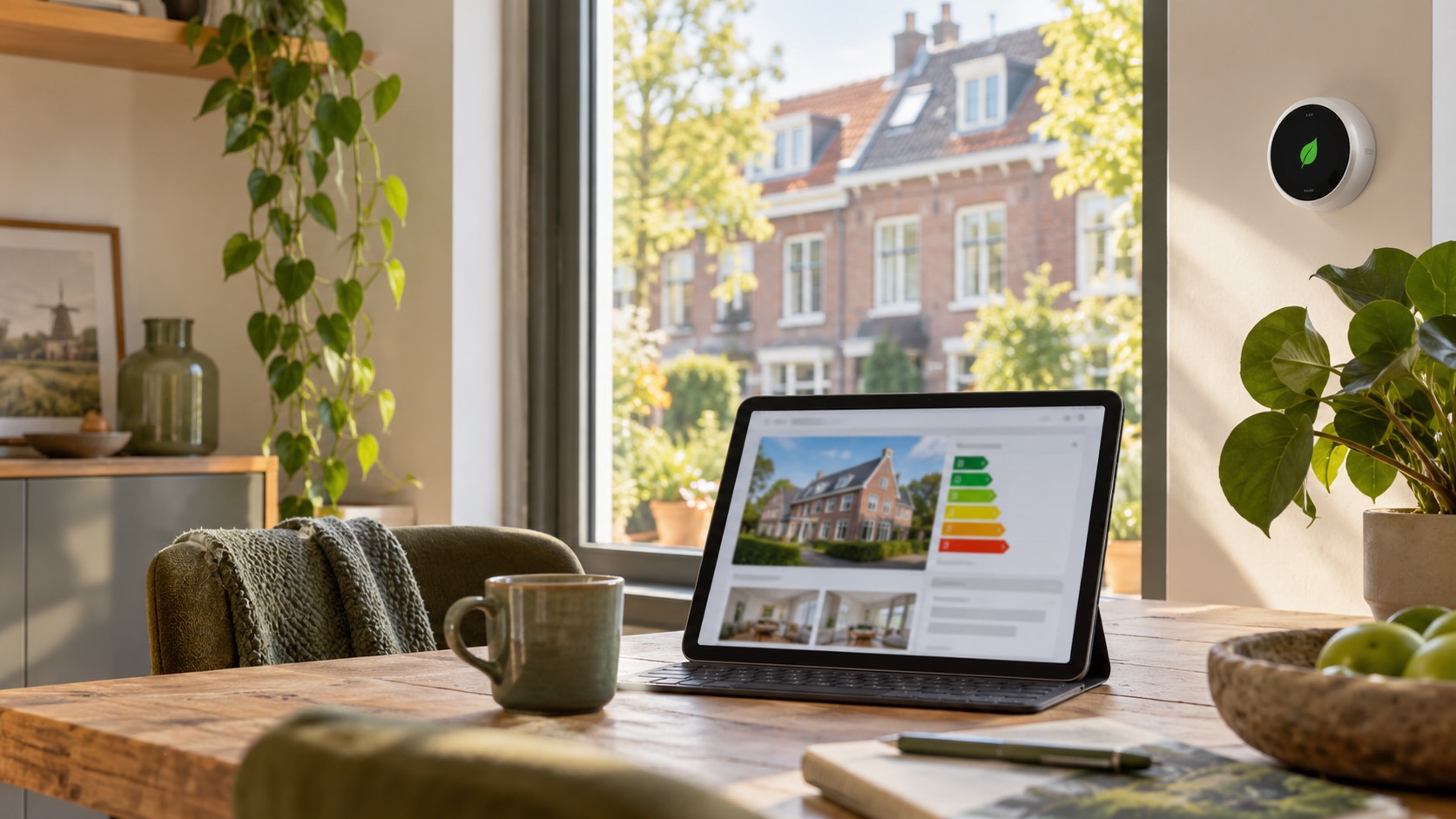
Before you bid, look up the energy label in EP-Online, the official register run by RVO. Check the letter and the expiry date, and ask for the full report.
The label affects your financing and helps decide which improvements you want to look into. The listing alone does not give you enough for that.
A label is valid for ten years, so check the expiry date as well. If there is no valid label, ask the seller or the agent when one will be arranged. Put the registration next to the listing and the report you receive.
In the report, look at which insulation, which glazing and which installations the house has, and take the heating, the ventilation and any solar panels along with it. Two homes with label C can need very different improvements. Replacing glazing is a different job from insulating a crawl space you can barely reach.
Where work has been done recently, ask for invoices or photographs. That shows you what was actually carried out and what is only listed in the report as an option.
| Energy label | Extra borrowing capacity on purchase |
|---|---|
| A++++ with a guaranteed energy performance of at least ten years | €40,000 |
| A++++ | €30,000 |
| A+++ | €25,000 |
| A+ and A++ | €20,000 |
| A and B | €10,000 |
| C and D | €5,000 |
| E, F and G | €0 |
The 2026 lending norms give extra room at purchase and separate room for energy-saving measures.
Those amounts do not mean you can simply borrow them. Your income, the interest rate and your commitments still count. And the limit based on the value of the house applies as well. How both tests work is in calculating your maximum mortgage.
A poor label calls for research into the cost and the feasibility. Look at the roof, the foundations, the pipework and the space to carry the measures out. A good label gives no certainty about those parts either.
With solar panels, ask whether they are owned or fall under a rental or lease agreement. Read what happens to that contract on sale.
Put the improvements you want to look into next to your budget. Ask your mortgage adviser which borrowing room applies on the basis of your income and the value of the house, and how much room there is for energy-saving measures. That way you use the label information for your bid and your conditions, instead of discovering it during the mortgage application.
Other questions to ask about the house are in the viewing checklist.
Checked on October 7, 2026. Livio provides information, not personal advice. Ask your adviser, notary or estate agent what applies to you.
Phase 2Your maximum mortgage in 2026 depends on your income and the value of the home, and the energy label can add extra room.
 House hunting
Compare recent sales and explain the differences before you attach a value to the house.
 House hunting
First see whether the house suits you, then note which parts need looking into further.