 House hunting
Checking the energy label before you buy a Dutch home
Check the label and the report to judge your borrowing room and the improvements worth investigating.

Phase 2 · 5 min read
Your maximum mortgage in 2026 depends on your income and the value of the home, and the energy label can add extra room.
Your maximum mortgage is the lower of two amounts: what you may borrow on your income and what you may borrow on the value of the home. The first takes in your income, the interest rate and your financial commitments. The second takes in the market value of the home, with an exception for energy-saving measures.
That extra room from the energy label only counts in the income test, and not every home or every income automatically produces the highest amount.
The calculation starts from your durable gross income: the income the lender may count under the rules. If you buy together, both incomes are counted under the rules in force.
Which share of that income may go to mortgage costs is set by the financing cost percentage. That percentage depends on your income and the interest rate. The monthly payment that follows from it is converted into a loan amount.
Debts, lease agreements and other commitments can reduce that room. With a student loan, since 2024 it is the monthly amount you pay DUO now that counts, instead of your original debt. Anyone who has already paid off a good deal can therefore borrow more than older rules of thumb suggest. You find the amount in MijnDUO. Have your mortgage adviser confirm which monthly amounts they count for your debts and lease, and which acceptance conditions the lender sets for them.
If you are single and your assessable income is above €30,000, the lender can leave €17,000 of your mortgage out of the income test: it then tests the monthly payment on a loan that is €17,000 lower. That lets you borrow €17,000 more than on your income alone. From state pension age this applies above an assessable income of €29,000. You do have to be above the threshold: before state pension age, exactly €30,000 is not enough.
If you fix the rate for ten years or longer, the income test works with the actual interest rate. If you fix for a shorter period, a minimum test rate applies: the test then works with that minimum rate, even if the rate you are offered is lower.
So with a short period, a low offered rate does not give you extra borrowing room. Compare different fixed-rate periods on the same income details, and ask your adviser, for each period, which loan amount and which monthly payment apply to you.
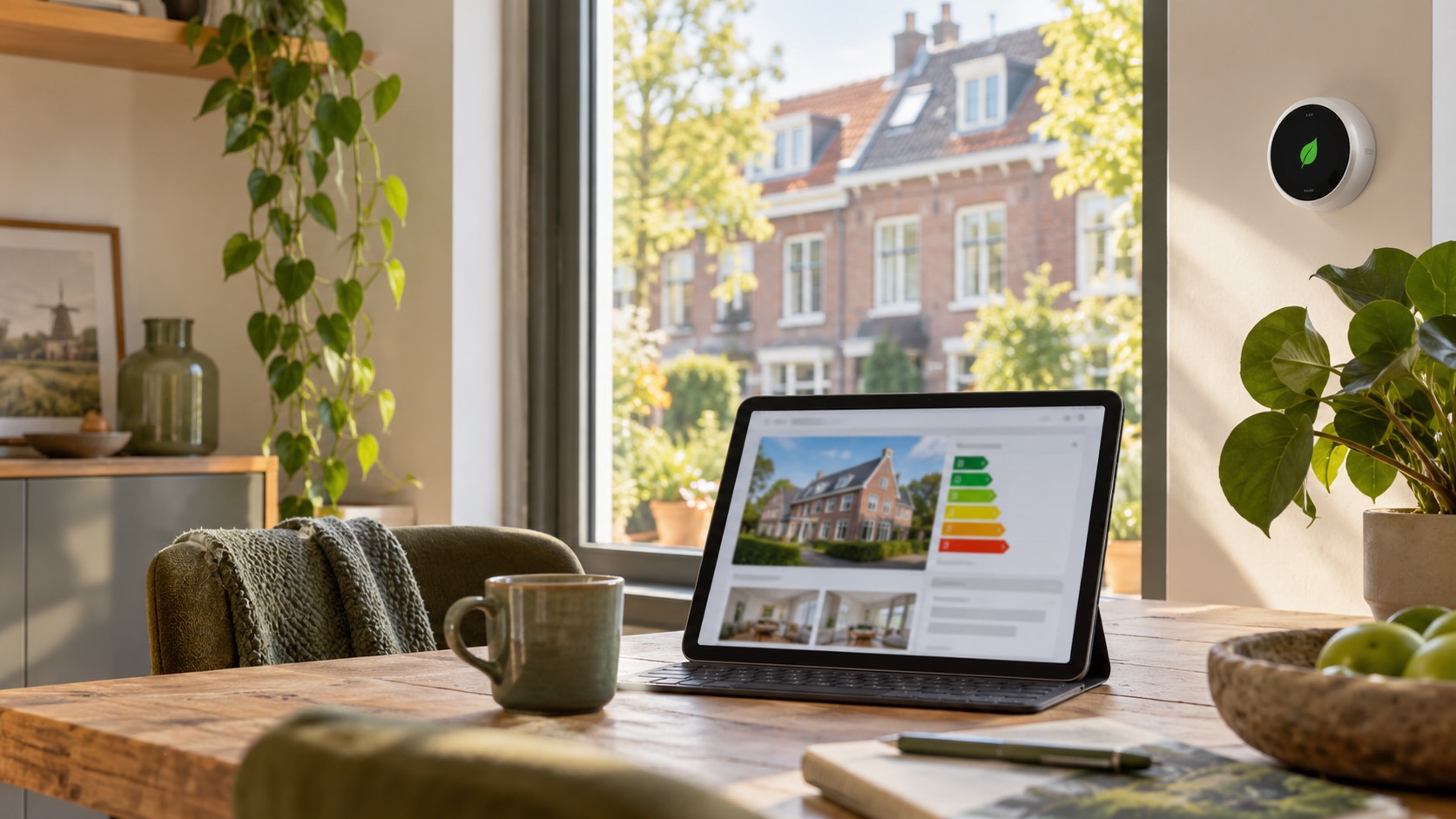
The better the energy label, the more you may borrow on top of the income test. So the amount can differ for every home you look at. Look up the label before you calculate.
Example on an income test outcome of €300,000
This is an example, not a personal calculation. Your income, interest rate, financial commitments and the property value determine how much you can borrow. Your monthly payment depends on the amount you end up borrowing.
| Energy label | Extra borrowing capacity on purchase in 2026 |
|---|---|
| E, F, G | €0 |
| C, D | €5,000 |
| A, B | €10,000 |
| A+, A++ | €20,000 |
| A+++ | €25,000 |
| A++++ | €30,000 |
| A++++ with a guaranteed energy performance of at least ten years | €40,000 |
This table gives the amounts at purchase in 2026. A+++ and A++++ are lower in it than in 2025, when they were €30,000 and €40,000. A news article or a calculator from last year therefore gives too high a figure.
If you want to make a home with a lower label more sustainable, you may borrow extra for that separately. That runs up to €20,000 at label E, F or G. Where the home has no valid energy label, €10,000 applies. The amount has to be spent on the measures themselves.
Alongside the income test, the value of the home acts as a limit. In principle your mortgage may not exceed 100% of the market value. For recognised energy-saving measures that can rise, under conditions, to 106%. The excess has to be spent on those measures.
Extra borrowing room from the energy label does not lift this limit. The lower of the two limits sets your actual maximum. That is why an offer above the valuation calls for money of your own.
First work out which monthly payment you want to carry alongside your other spending, and put that next to the maximum loan amount. Include the purchase costs and your own money, maintenance and a buffer. The first-time buyer exemption can reduce the contribution you need, but it is not extra mortgage room.
Tell your mortgage adviser that you are buying on your own, so they take the rule for single buyers into account.
Checked on September 12, 2026. Livio provides information, not personal advice. Ask your adviser, notary or estate agent what applies to you.
House huntingCheck the label and the report to judge your borrowing room and the improvements worth investigating.
 Phase 3
In 2026, count on €4,200 to €6,900 of basic costs, plus any transfer tax, the part of the price your mortgage does not cover, and a buffer for after the keys.
 Phase 2
Weigh the one-off NHG fee, the mortgage conditions and the safety net if you cannot keep up payments.