 Renovating
Preparing for a kitchen appointment: what to bring
Bring your floor plan, photos and a description of your everyday kitchen habits so the designer can work out a layout that suits you.
Renovating · 3 min read
Check each kitchen appliance to see whether the existing connection is suitable or whether the electrics, water or gas supply needs changing.
Start with the connection and the appliance manual. Plugging in a fridge with a suitable plug is a different job from installing a new cooker circuit.
If you want to connect an appliance yourself, check that the right connection is available and that the manufacturer allows that method. Have any changes to fixed installations assessed beforehand.
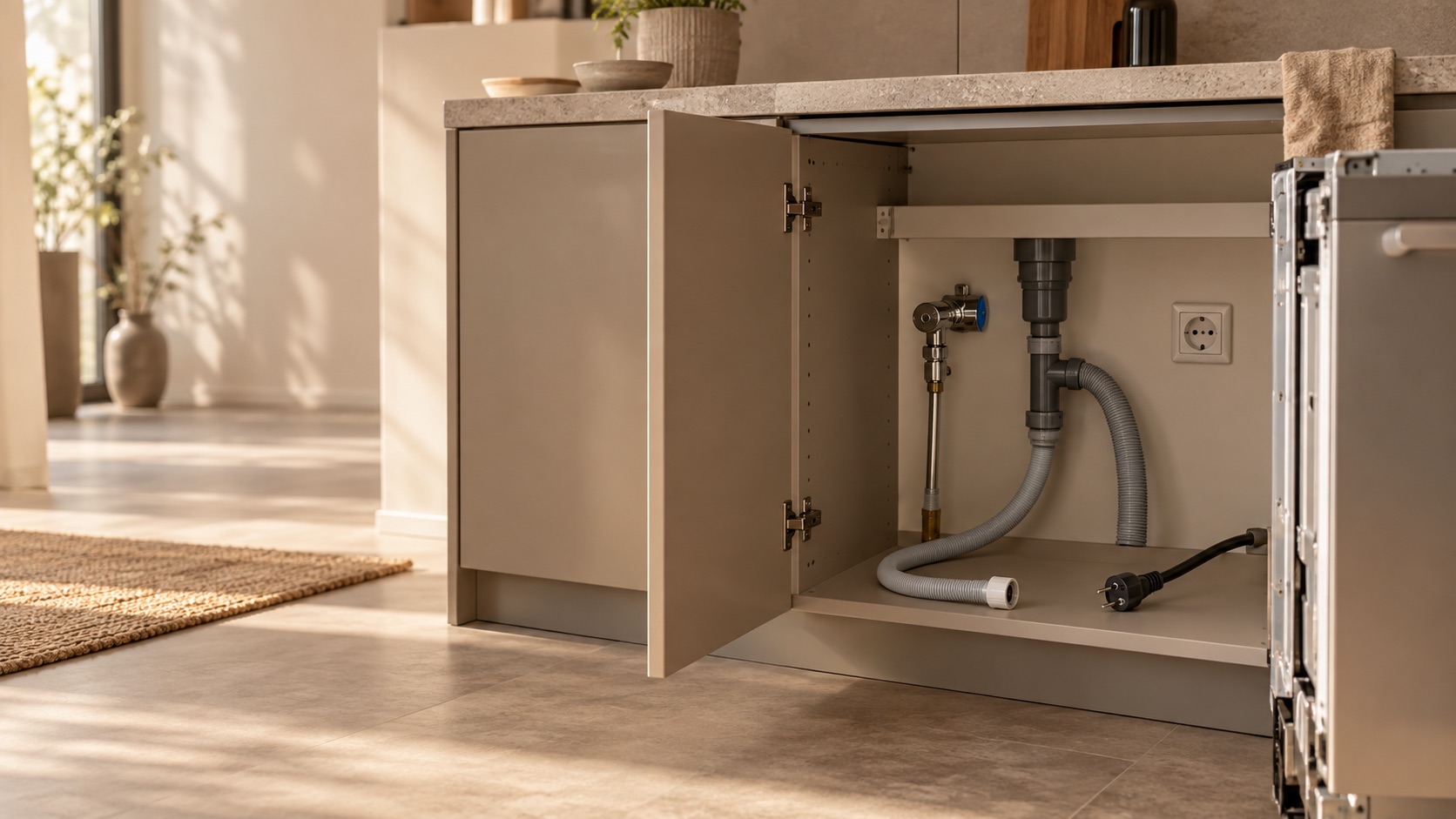
A standard plug may be enough for a fridge, freezer or extractor hood. A dishwasher also needs accessible water and waste connections.
Use the manual to check hoses, couplings and plugs before sliding the appliance into place. They are still easy to reach at that point. Keep the water-stop device and shut-off points accessible afterwards too.
Take the hob’s power rating and wiring diagram to the electrician. They can check whether the circuit, cable and connection suit the appliance. Looking at the plug alone is not enough.
A hob rated at 3.6 kW or above needs a 5-pin connection. Up to around 7.4 kW, a 2-phase connection is often used. From 7.6 kW, manufacturers usually recommend a 3-phase connection at 400 volts. Have the exact wiring arrangement checked for your chosen hob.
A new circuit or altered fixed installation must comply with NEN 1010, the standard for electrical installations in homes. The network operator’s meter, main fuse and sealed parts are also outside ordinary DIY connection work.
Fitting the kitchen yourself or hiring someone explains how to divide the work with the fitter.
Have the design checked if pipes are being moved, joints will be hidden behind a wall or several appliances share a waste pipe. A leak behind units is not always immediately visible.
Agree who will test the connection and do it before the units hide everything. This makes the check part of the connection work.
Since 1 April 2023, only a company with a valid CO-vrij certificate may work on central heating boilers, gas water heaters, gas fires and gas heaters. Working on such an installation yourself is a criminal offence. Check the company in the TloKB register. This certification requirement does not apply to a gas cooking appliance or work on the gas pipe itself. That does not make the work unregulated: the gas installation in an existing home must comply with NEN 8078.
Ask the installer to confirm beforehand which rules and certification apply to your job. An exemption from one certification requirement does not permit unsafe work.
Ask what installation requirements the manufacturer and supplier set. Keep invoices, wiring diagrams and photos before parts disappear behind the units.
Also check what the fitting guarantee covers. This helps you keep track of who to contact about an installation problem.
Checked on September 16, 2026. Livio provides information, not personal advice. Ask your adviser, notary or estate agent what applies to you.
RenovatingBring your floor plan, photos and a description of your everyday kitchen habits so the designer can work out a layout that suits you.
 Renovating
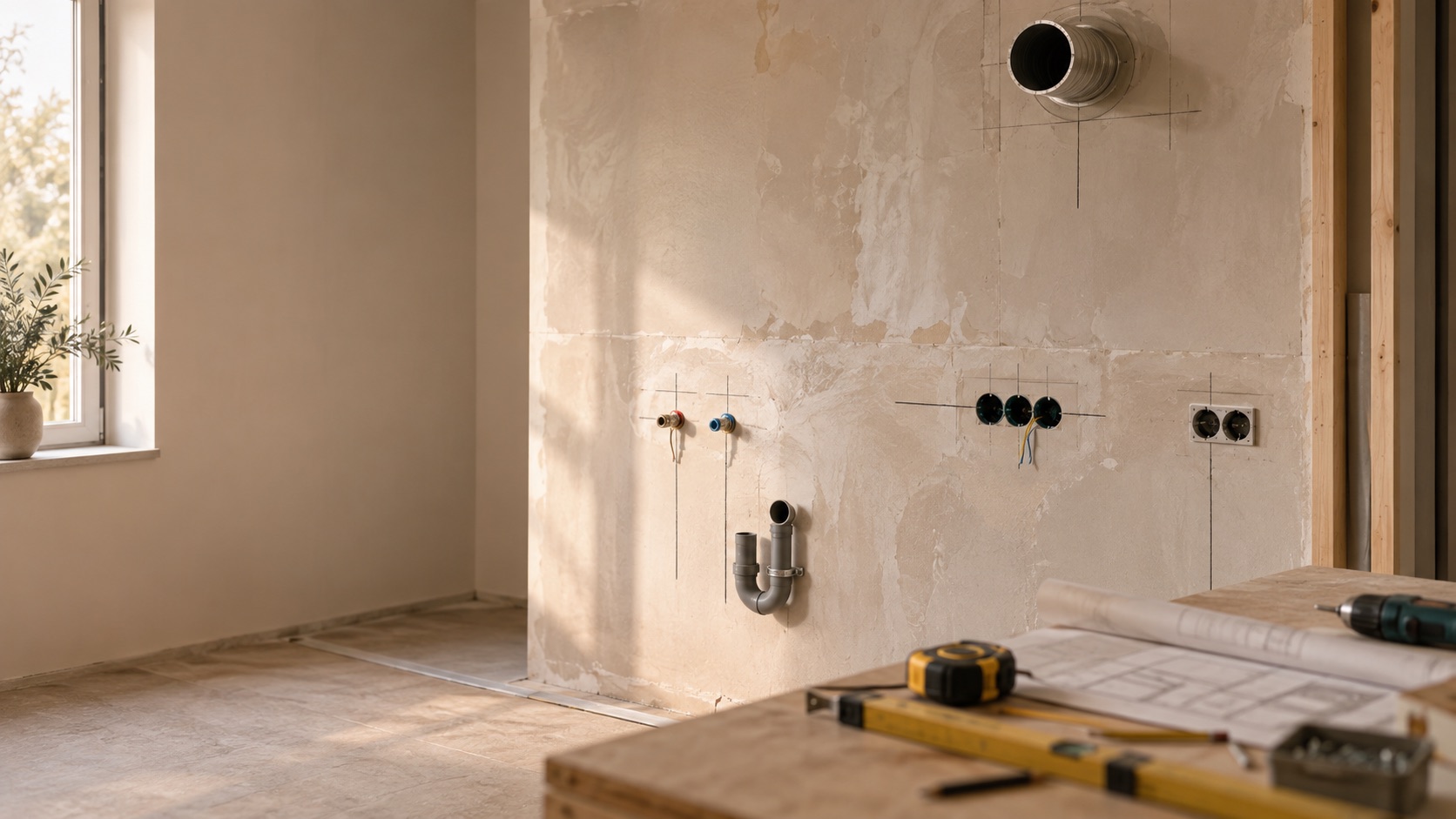
Measure the room and connection points in millimetres from the same corner, then have the measurements checked before ordering.
 Renovating
Check drainage, extraction and electrics before finalising a new kitchen layout.