 Renovating
Renovation checklist: planning, budget and sequence
Set out the work, the order and the budget before you confirm delivery dates and sign anything.

Phase 5 · 4 min read
Get the house ready for daily use, then choose the furniture and the finishes that suit the rooms.
Once you have the keys, start with the jobs that are easier in an empty house, such as painting, plastering and moving pipework. Then measure again and decide what you need on day one. The rest of the furnishing does not have to be finished at the same time.
Keep the renovation budget and the furnishing budget apart. That way you can see how much is left for flooring, lighting, window coverings and furniture.
Painting, plastering and moving pipework are all easier without furniture. Agree the work and the drying times with the trades. The renovation checklist helps with the order.
If you are demolishing, changing structure or extending, check permits and notifications in advance. Have material that might contain asbestos assessed before you touch it.
Demolition work may need a notification. That applies among other things when more than 10 m³ of demolition waste is produced. Separate rules apply to asbestos, including for smaller quantities. The standard notice period for a demolition notification is four weeks, although exceptions apply in some situations.
Was the house built before 1994? Then asbestos may be present. Have material that might contain it assessed first. Do not drill, sand or demolish it yourself.
Measure the walls and the ceiling height, and mark the doors, the way they open, the sockets and the radiators on your plan. For larger furniture, look at the route through the doors and the stairwell as well. In an apartment the lift and the shared entrance are part of that delivery route.
Use the sales floor plan as preparation, not as the only basis for anything made to measure.
Ask the floor fitter and the kitchen supplier whether the floor runs on underneath the units. What a new kitchen costs is something you budget separately from your furnishing. Have a new screed checked before the finish is laid.
Plan the plastering, the painting, the floor and the fitted furniture together. A supplier needs to know which work still has to happen before their product goes in.
A bed, basic lighting, window coverings, a dining table and the storage you need come first. Loose accessories and extra furniture can follow.
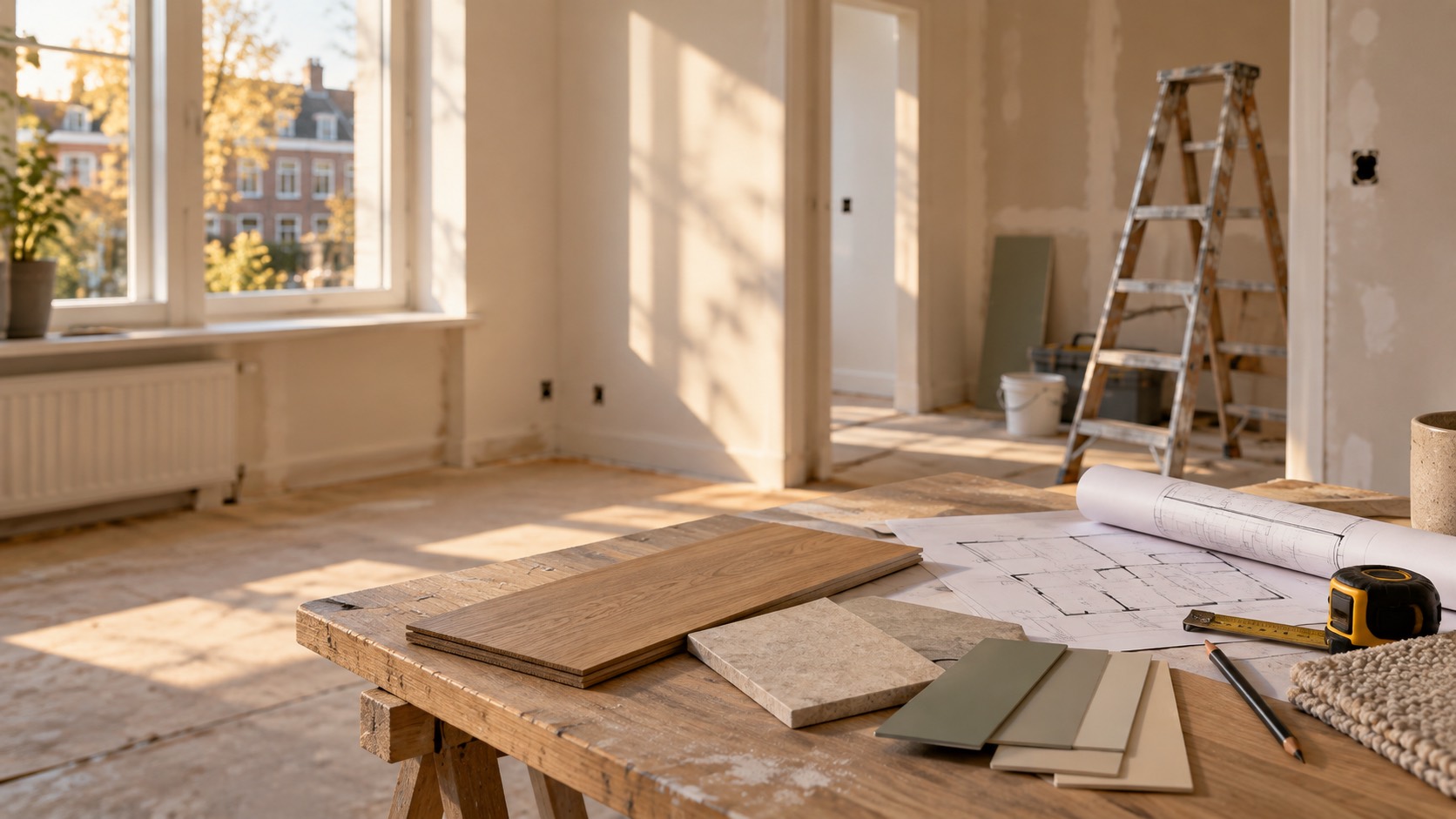
Take paint samples and material samples with you to the house. Look at them in daylight and with the lights on. The light in your own rooms changes how the colours and the materials look.
After a few weeks you notice which routes through the house work, where light is missing and which storage you actually use. Take that with you before you order the rest.
Maintenance stays a separate task. Use the structural survey and note any new points of attention. What else to arrange after the move is in the checklist for the first weeks.
Checked on October 8, 2026. Livio provides information, not personal advice. Ask your adviser, notary or estate agent what applies to you.
RenovatingSet out the work, the order and the budget before you confirm delivery dates and sign anything.
 Renovating
Give dust, pipework and hard-to-reach finishing priority over jobs that can wait.
 Renovating
Compare the complete job, including installation, connections and making the room good again.